From Printing Inks to a Sustainable Future, Building a Greek Industrial Group
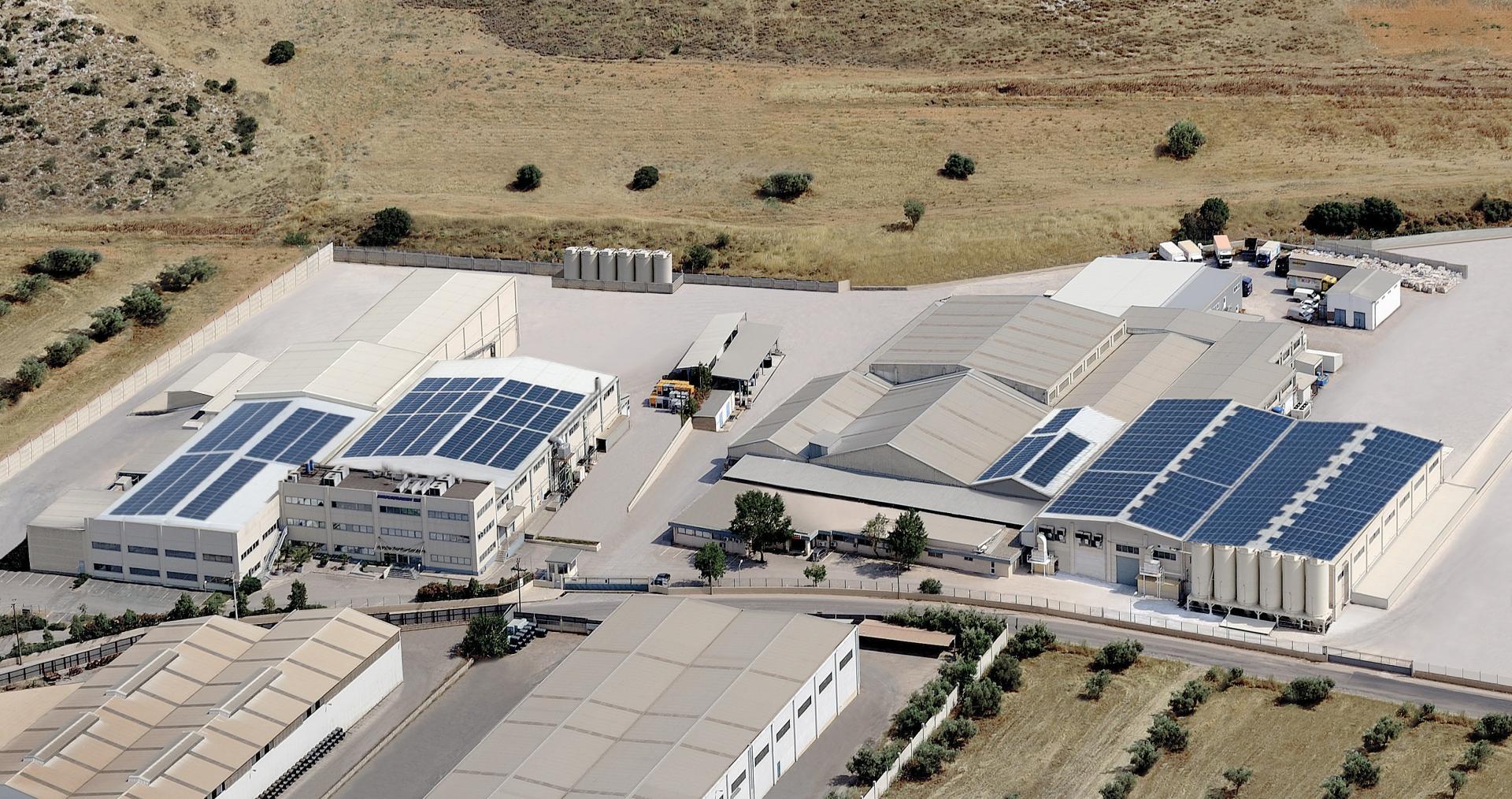
An Interview with the Founder of DRUCKFARBEN Group
Few industrial companies manage to evolve across decades of technological change, regulatory pressure, and shifting market demand. Fewer still manage to do so while remaining family-owned and internationally competitive. In this interview, the founder of DRUCKFARBEN Group reflects on the company’s journey through the three brands, DF Inks, KRAFT Paints and Bioclima.
What drove you to start your own business?
In the late 1970s, an opportunity arose to establish a small production unit, essentially a “start-up” by the standards of the time, with the aim of producing inks for printing on paper.I had studied chemistry, but I was always sales oriented. Through my father’s work abroad, in the cosmetics sector, I had access to chemists and technical knowledge. I saw an opportunity to combine formulation expertise with a sales-driven mindset.
The goal was not simply to manufacture ink. It was to solve a problem and build relationships with converters who needed reliability. That focus on technical performance combined with customer proximity became the foundation of the company.
When did you decide to shift toward flexible packaging?
The shift was strategic and driven by market realities.
Traditional print volumes began to decline, while flexible packaging was expanding rapidly. At the same time, converters in Greece and the Balkans were investing in higher-quality production lines and export-oriented growth.
Food plays a central role in Greek culture and industry. As strong food brands developed, packaging became more sophisticated and more regulated. We wanted to be part of that value chain.
Flexible packaging inks require a different level of technical capability, adhesion across complex substrates, lamination performance, chemical resistance, and compliance with food contact regulations. Entering this segment meant moving up the value ladder.
It was not simply diversification. It was a repositioning toward performance-driven, regulation-intensive, and internationally scalable markets.
Why expand into paints and construction mortars?
From a strategic perspective, the move was logical.
All three sectors inks, paints, and mortars are chemistry-driven. They share raw material categories, resin technologies, pigment systems, and R&D infrastructure. Procurement and production synergies allowed us to leverage economies of scale.
At the same time, diversification created resilience. When one segment slows, another may grow. Launching KRAFT Paints was also a different experince from a rigif B2B industro to a B2B2C one which allowed us to create a consumer facing brand.
But there is also a broader philosophy behind it. Color has always been at the heart of what we do. Whether it is on packaging protecting food, or on the walls of someone’s home, our products become part of daily life. They shape spaces, influence perception, and create experience.
The idea that our work exists both in industrial production lines and in people’s homes is something I find deeply motivating.
What have been defining milestones in your expansion?
One significant milestone was our entry in the Nigerian market. Operating in Nigeria presented a new set of challenges, geopolitical volatility, currency fluctuations, and infrastructure differences. However, it also offered exposure to a large and fast-growing market.
In many cases, our role extended beyond supplying inks. We worked with converters to align their production with European food safety regulations and quality standards. That knowledge transfer strengthened long-term partnerships.
The experience confirmed that a Greek family-owned company can operate internationally if it combines flexibility with structured processes and technical credibility.
How have your industries changed over the past decade?
The transformation has been substantial.
Regulatory frameworks are significantly stricter, particularly in food packaging. Recyclability, migration limits, and documentation requirements are no longer optional considerations, they are prerequisites.
At the same time, converters are under pressure to improve efficiency. Faster press speeds, lower solvent retention, waste reduction, and supply chain transparency are critical performance indicators.
In the architectural coatings, mortars and thermal insulation sectors, energy efficiency has become a primary driver. Bioclima and KRAFT Paints allows us to help buildings must meet stricter insulation standards, and serve consumers that are more aware of indoor air quality.
Across all sectors, customers expect measurable sustainability performance not just claims. Certifications, environmental management systems, and documented ESG practices increasingly influence purchasing decisions.
These changes raise the technical threshold for suppliers. But they also create opportunities for companies willing to invest in R&D and compliance.
How do you define sustainability in a practical business sense?
Sustainability must be integrated into operations, products, and governance.
On the manufacturing side, this means structured environmental management systems, investment in energy efficiency, waste segregation, and responsible handling of chemicals.
At the product level, it involves reducing VOC content, improving compatibility with mechanical recycling streams, and aligning formulations with evolving European regulations.
On the governance side, it requires transparency, responsible sourcing, employee development, and measurable performance indicators.
Sustainability is not separate from competitiveness. In many cases, regulatory alignment and resource efficiency improve operational performance.
As a Greek family company with multinational presence, what is the strategic focus going forward?
Our roots remain Greek, but our outlook is international.
Exports will continue to be a core growth driver. Africa represents an important hub for inks, with expanding demand for high-performance and regulation-compliant solutions. At the same time, we aim to strengthen our position in established European markets.
Innovation remains central. Across all brands, we are investing in product footprint declarations, VOC reduction, recyclability-optimized ink systems, and solutions aligned with green building standards.
Operational excellence is equally important. Production optimization, digitalization, and supply chain transparency are priorities. Efficiency is not only a cost issue, it is a sustainability issue.
Most importantly, growth depends on people. Technical expertise, structured management, and a culture that balances entrepreneurial agility with governance discipline will define the next phase of development.